
Gas Water Heater Repair in Elkhorn, NE
A gas water heater is a combustion appliance sitting inside your house. Fixing one is partly about hot water and partly about making sure the exhaust still goes up the flue instead of into the basement.
Call (402) 897-1841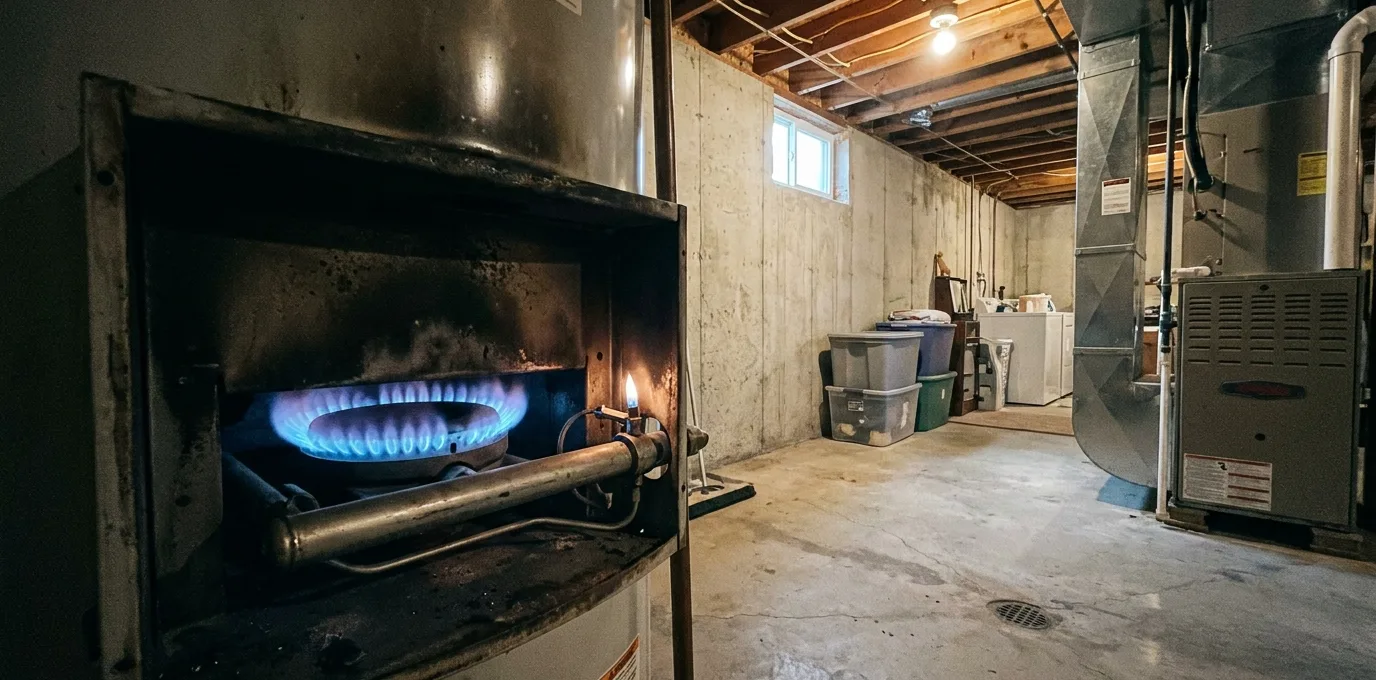
The gas-side faults we actually find
Thermocouple or flame sensor
The single most common gas repair. This small probe proves to the gas valve that a flame exists. As it ages it produces less millivoltage, the valve stops trusting it, and the pilot drops out minutes after you light it.
Gas control valve
The thermostat and safety shutoff in one housing. When it fails you get no gas to the burner at all, or a burner that will not modulate. It is a bigger part than a thermocouple and worth weighing against the tank's age.
Pilot assembly and orifice
Lint, pet hair and dust choke the pilot orifice, giving a weak yellow flame that will not hold the thermocouple. Cleaning it usually restores a crisp blue flame.
Main burner
Rust flakes and scale off the tank bottom land on the burner ports. A dirty burner runs yellow, sooty and inefficient, and soot deposits then make everything worse.
Flammable vapour ignition-resistant lockout
Most heaters made since the mid-2000s have an FVIR system with a screened air intake at the base. Clog that screen and the unit goes into a lockout that no amount of relighting will clear.
Draft and venting
A disconnected vent connector, a flue blocked by debris, or a house pulling harder than the flue can. This is the one that is genuinely dangerous rather than merely annoying.
Every gas visit ends with a combustion check
Restoring the flame is only half a gas repair. Before Water Heater Repair Elkhorn packs up, we confirm the appliance is drafting properly — that the exhaust is leaving through the flue under real operating conditions, with the house closed up and any bath or kitchen fans running as they normally would.
That last detail matters more than people expect. A powerful range hood or dryer can put a tight basement under enough negative pressure to pull exhaust back down an atmospheric flue. The appliance can be in perfect condition and still spill combustion gases into the room.
- Draft confirmed under worst-case depressurisation, not just at idle
- Vent connector rise, slope, support and connections inspected
- Flue interior checked for scale, debris and nesting
- Burner flame colour and pattern assessed
- Gas connections leak-tested
- A working carbon monoxide alarm recommended on every level
If you smell gas, do this instead
Leave the building
Take everyone with you. Do not stay to investigate.
Do not touch a single switch
Not a light, not a fan, not a garage door, not your phone while inside. A switch contact is an ignition source.
Call the gas utility from outside
From a neighbour's or from the street. They come out for this at any hour and there is no charge for the visit.
Call us once the utility has cleared it
We will take it from there. (402) 897-1841.
Frequently asked questions
Why does my pilot light keep going out?
Nine times out of ten it is a tired thermocouple, and that is a modest repair. The other one is a draft problem or a blocked air intake, which is worth finding rather than living with.
Is a yellow burner flame a problem?
Yes. A healthy gas flame is blue with a small yellow tip. A largely yellow, lazy flame means incomplete combustion, which produces carbon monoxide and soot. Get it looked at.
Do you work on power-vent and direct-vent models?
Yes — blower assemblies, pressure switches, air-proving circuits and the sealed venting they use, as well as standard atmospheric units.